

How Do Rocks And Soil Clean Water
Describe critical components of groundwater
What You'll Learn to Do
- Differentiate between groundwater and the h2o table
- Depict how groundwater is afflicted by porosity and permeability of geologic materials with respect to unlike types of aquifers.
- Compare and contrast potential well use within diverse types of aquifers.
- Identify issues with groundwater withdrawal
- Describe issues with the quality of groundwater and keeping water clean
Groundwater
Although this may seem surprising, h2o beneath the ground is commonplace. Normally groundwater travels slowly and silently below the surface, only in some locations it bubbles to the surface at springs. The products of erosion and deposition by groundwater were described in the Erosion and Deposition chapter.
Groundwater is the largest reservoir of liquid fresh water on Globe and is constitute inaquifers, porous rock and sediment with h2o in between. H2o is attracted to the soil particles and capillary activeness, which describes how water moves through a porous media, moves water from wet soil to dry areas.
Aquifers are constitute at different depths. Some are just below the surface and some are found much deeper beneath the land surface. A region may have more than than 1 aquifer below it and even nigh deserts are above aquifers. The source region for an aquifer beneath a desert is likely to exist far from where the aquifer is located; for example, information technology may be in a mount area.
The corporeality of water that is available to enter groundwater in a region is influenced by the local climate, the slope of the land, the type of rock plant at the surface, the vegetation encompass, land employ in the expanse, and water retention, which is the amount of water that remains in the footing. More water goes into the ground where in that location is a lot of pelting, flat country, porous stone, exposed soil, and where water is not already filling the soil and stone.
The residence fourth dimension of water in a groundwater aquifer tin be from minutes to thousands of years. Groundwater is often called "fossil h2o" considering it has remained in the ground for so long, often since the end of the ice ages.
Aquifers
Features of an Aquifer
To exist a good aquifer, the rock in the aquifer must accept good:
- porosity: small spaces between grains
- permeability: connections between pores
This animation shows porosity and permeability. The water droplets are institute in the pores between the sediment grains, which is porosity. When the water can travel between ores, that's permeability.
To reach an aquifer, surface water infiltrates downward into the ground through tiny spaces or pores in the stone. The h2o travels down through the permeable rock until information technology reaches a layer that does non have pores; this stone is impermeable (figure 1). This impermeable rock layer forms the base of the aquifer. The upper surface where the groundwater reaches is the water tabular array.
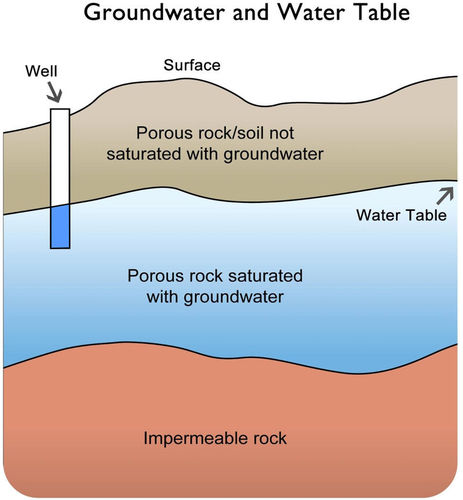
Figure ane. Groundwater is found beneath the solid surface. Notice that the water table roughly mirrors the slope of the land'south surface. A well penetrates the water table.
The Water Tabular array
For a groundwater aquifer to comprise the same amount of water, the amount of recharge must equal the amount of discharge. What are the probable sources of recharge? What are the likely sources of discharge?
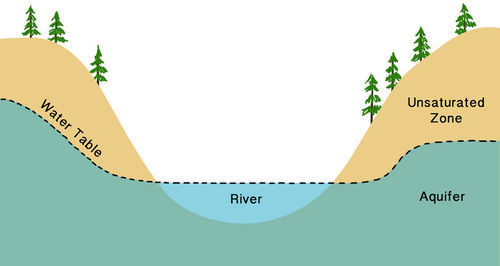
Figure 2. The top of the stream is the tiptop of the water tabular array. The stream feeds the aquifer.
In wet regions, streams are fed by groundwater; the surface of the stream is the top of the water table (figure 2). In dry regions, water seeps down from the stream into the aquifer. These streams are often dry much of the year. Water leaves a groundwater reservoir in streams or springs. People take water from aquifers, too.
What happens to the water table when there is a lot of rainfall? What happens when in that location is a drought? Although groundwater levels do not rise and fall every bit rapidly as at the surface, over time the water table will rise during wet periods and fall during droughts.
One of the near interesting, only extremely singular types of aquifers is found in Florida. Although aquifers are very rarely underground rivers, in Florida h2o has dissolved the limestone and so that streams travel underground and higher up ground (figure 3).
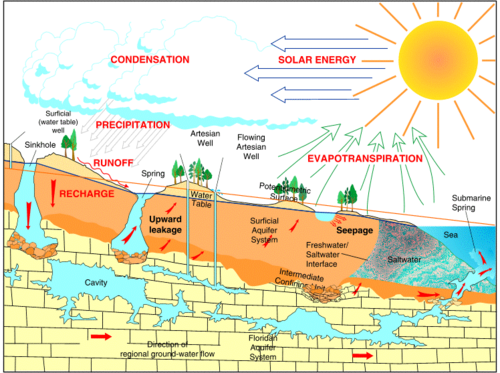
Figure 3. In Florida, groundwater is sometimes non underground.
Porosity and Permeability

Effigy 4. A spring coming out of the shale almost Scarlet Creek. Yes, that water is black! (Photograph: Matt Herod)
As we've learned, groundwater is only water that exists hole-and-corner. However, there are still lots of misconceptions virtually how people envision groundwater. Many envision large underground lakes and rivers, and while those practice exist, they represent an infinitesimally small percent of all groundwater. Mostly speaking groundwater exists in the pore spaces between grains of soil and rocks. Imagine a water filled sponge. All of the holes in that sponge are h2o-filled. Past squeezing that sponge we forcefulness the water out, similarly, past pumping an aquifer we force the water out of pore spaces.
There are lots of terms in hydrogeology, most of which are very uncomplicated, but essential. Here are a few of the large ones and their meanings.
Porosity
Porosity is an intrinsic property of every fabric. Information technology refers to the amount of empty space within a given material. In a soil or stone the porosity (empty space) exists betwixt the grains of minerals. In a material like gravel the grains are large and there is lots of empty infinite between them since they don't fit together very well. However, in a material like a gravel, sand and clay mixture the porosity is much less as the smaller grains make full the spaces. The corporeality of h2o a material can agree is direct related to the porosity since water will endeavour and fill the empty spaces in a material. We measure porosity past the percentage of empty space that exists within a particular porous media.

Figure v. Porosity in two different media. The image on the left is analagous to gravel whereas on the right smaller particles are filling some of the pores and displacing water. Therefore, the water content of the fabric on the right is less. (Source: Wikipedia)
Permeability
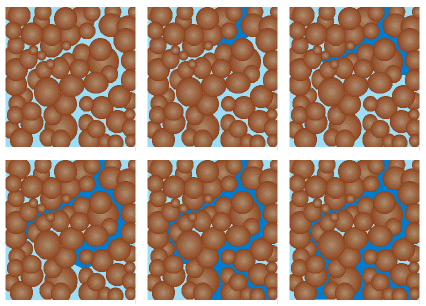
Figure 6. Video showing how continued pores have high permeability and can transport water easily. Note that some pores are isolated and cannot transport water trapped inside them.
Permeability is another intrinsic property of all materials and is closely related to porosity. Permeability refers to how connected pore spaces are to one some other. If the material has loftier permeability than pore spaces are connected to one another allowing water to flow from one to another, however, if there is low permeability then the pore spaces are isolated and h2o is trapped inside them. For example, in a gravel all of the pores well connected one another assuasive water to flow through information technology, nonetheless, in a clay most of the pore spaces are blocked, meaning water cannot menstruum through it easily.
Aquifer
An aquifer is a term for a type of soil or rock that tin hold and transfer h2o that is completely saturated with water. That means that all it is just a layer of soil or rock that has a reasonably high porosity and permeability that allows it to contain water and transfer it from pore to pore relatively quickly and all of the pore spaces are filled with h2o. Practiced examples of aquifers are glacial till or sandy soils which have both high porosity and high permeability. Aquifers allows us to recover groundwater by pumping quickly and easily. Withal, overpumping tin can easily reduce the amount of h2o in an aquifer and crusade it to dry upward. Aquifers are replenished when surface water infiltrates through the footing and refills the pore spaces in the aquifer. This process is called recharge. Information technology is specially important to ensure that recharge is clean and uncontaminated or the entire aquifer could become polluted. There are two main types of aquifer. An unconfined aquifer is one that does not have an aquitard above it simply usually does beneath it.
When a water-bearing stone readily transmits water to wells and springs, it is called an aquifer. Wells can be drilled into the aquifers and water can exist pumped out. Precipitation eventually adds water (recharge) into the porous stone of the aquifer. The rate of recharge is not the aforementioned for all aquifers, though, and that must be considered when pumping water from a well. Pumping too much water too fast draws down the water in the aquifer and eventually causes a well to yield less and less water and even run dry. In fact, pumping your well likewise fast tin fifty-fifty crusade your neighbor's well to run dry if you both are pumping from the same aquifer.
In the diagram below, you can see how the ground below the h2o table (the blue expanse) is saturated with water. The "unsaturated zone" above the water table (the greenish surface area) notwithstanding contains water (later on all, plants' roots live in this expanse), but it is not totally saturated with water. You tin see this in the 2 drawings at the lesser of the diagram, which show a close-up of how water is stored in between hugger-mugger rock particles.
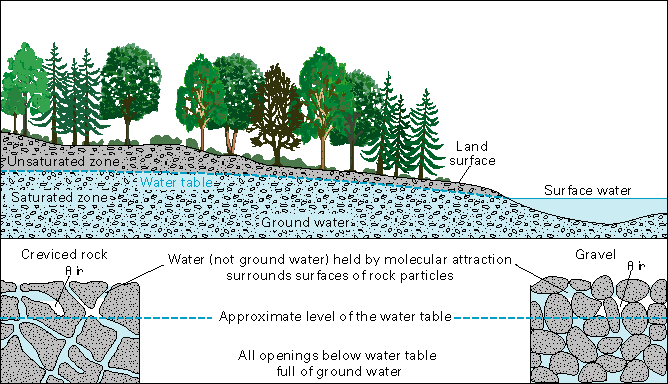
Figure 7.
Sometimes the porous rock layers go tilted in the earth. There might exist a confining layer of less porous rock both above and below the porous layer. This is an example of a confined aquifer. In this example, the rocks surrounding the aquifer confines the pressure level in the porous rock and its water. If a well is drilled into this "pressurized" aquifer, the internal pressure might (depending on the power of the rock to transport water) exist enough to push button the h2o up the well and up to the surface without the aid of a pump, sometimes completely out of the well. This type of well is chosen artesian. The pressure of water from an artesian well tin be quite dramatic.
A relationship does not necessarily exist betwixt the water-begetting capacity of rocks and the depth at which they are found. A very dense granite that will yield footling or no water to a well may exist exposed at the state surface. Conversely, a porous sandstone, such as the Dakota Sandstone mentioned previously, may lie hundreds or thousands of anxiety below the state surface and may yield hundreds of gallons per minute of water. Rocks that yield freshwater have been found at depths of more than half dozen,000 feet, and salty h2o has come up from oil wells at depths of more than thirty,000 feet. On the boilerplate, however, the porosity and permeability of rocks decrease as their depth below land surface increases; the pores and cracks in rocks at great depths are closed or greatly reduced in size because of the weight of overlying rocks.
H2o Movement in Aquifers
Water movement in aquifers is highly dependent of the permeability of the aquifer material. Permeable material contains interconnected cracks or spaces that are both numerous enough and large enough to permit water to motion freely. In some permeable materials groundwater may motility several metres in a twenty-four hour period; in other places, it moves only a few centimeters in a century. Groundwater moves very slowly through relatively impermeable materials such every bit clay and shale.
Subsequently inbound an aquifer, water moves slowly toward lower lying places and eventually is discharged from the aquifer from springs, seeps into streams, or is withdrawn from the ground by wells. Groundwater in aquifers between layers of poorly permeable stone, such as clay or shale, may be bars nether pressure. If such a confined aquifer is tapped by a well, water volition rise above the top of the aquifer and may even catamenia from the well onto the land surface. Water confined in this way is said to be under artesian pressure level, and the aquifer is called an artesian aquifer.
Visualizing Artesian Pressure
Here's a little experiment to evidence you lot how artesian pressure works. Fill up a plastic sandwich baggie with water, put a straw in through the opening, tape the opening around the harbinger closed, practisenon point the straw towards your teacher or parents, and then clasp the baggie. Artesian water is pushed out through the straw.
Aquitard
The other type is a bars aquifer that has an aquitard above and below it. An aquitard is basically the opposite of an aquifer with one key exception. Aquitards take very depression permeability and do not transfer h2o well at all. In fact, in the ground they often deed equally a barrier to water menses and split 2 aquifers. The one fundamental exception is that aquitards can accept high porosity and agree lots of water however, due to the their low permeability they are unable to transmit it from pore to pore and therefore water cannot menses within an aquitard very well. A good example of an aquitard is a layer of dirt. Dirt often has high porosity but virtually no permeability meaning information technology is substantially a barrier which water cannot flow through and the water inside it is trapped. However, in that location is still limited water menstruation within aquitards due to other processes that I won't get into at present.
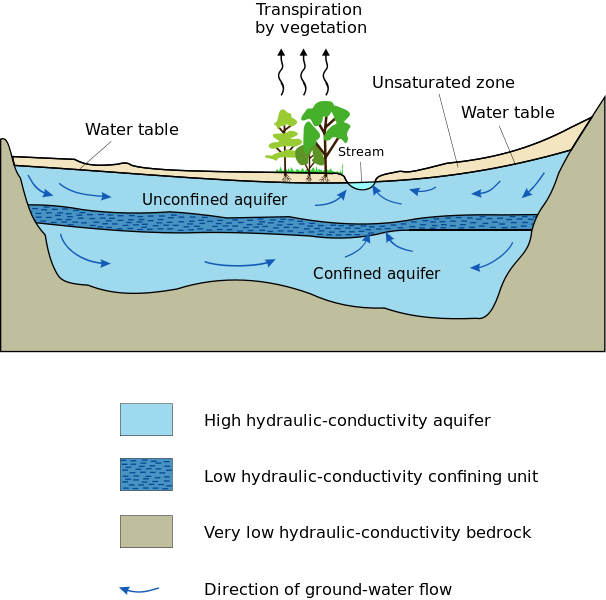
Figure 8.
Aquifers and Well-Potential
There'southward a good risk that the average Joe who had to dig a well in ancient Arab republic of egypt probably did the work with his easily, a shovel, and a bucket. He would accept kept excavation until he reached the water tabular array and water filled the bottom of the hole. Some wells are nonetheless dug by manus today, but more than modern methods are available. It'south still a dingy chore, though!
Wells are extremely important to all societies. In many places wells provide a reliable and ample supply of h2o for home uses, irrigation, and industries. Where surface h2o is scarce, such as in deserts,people couldn't survive and thrive without groundwater.
Types of Wells
Digging a well by hand is becoming outdated today (would You lot want to do it?). Modern wells are more ofttimes drilled by a truck-mounted drill rig. Withal, there are many ways to put in a well—here are some of the common methods.
Dug Wells
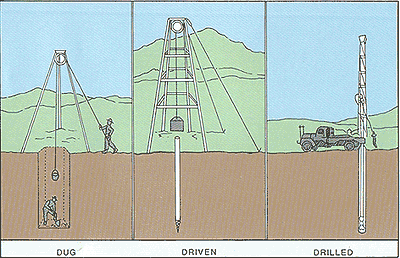
Figure nine. Well Types
Hacking at the ground with a pick and shovel is one mode to dig a well. If the ground is soft and the water tabular array is shallow,and so dug wells can work. Historically, dug wells were excavated by hand shovel to below the water table until incoming h2o exceeded the digger'southward bailing rate . The well was lined with stones, brick, tile, or other material to prevent plummet, and was covered with a cap of woods, stone, or concrete. They cannot exist dug much deeper than the water table — just as you cannot dig a hole very deep when y'all are at the beach… it keeps filling up with water!
Driven Wells
Driven wells are notwithstanding common today. They are built by driving a small-diameter pipe into soft earth, such every bit sand or gravel. A screen is usually attached to the bottom of the pipage to filter out sand and other particles. Problems? They can only tap shallow water, and because the source of the water is so close to the surface, contagion from surface pollutants tin can occur.
Drilled Wells
Well-nigh modern wells are drilled, which requires a fairly complicated and expensive drill rig. Drill rigs are frequently mounted on large trucks. They apply rotary drill bits that chew away at the rock, percussion $.25 that blast the rock, or, if the ground is soft,big auger bits. Drilled wells can exist drilled more than i,000 anxiety deep. Often a pump is placed at the bottom to push water up to the surface.
H2o Levels in Wells
Ground-water users would find life easier if the h2o level in the aquifer that supplied their well always stayed the aforementioned. Seasonal variations in rainfall and the occasional drought affect the "height" of the underground water level. If a well is pumped at a faster charge per unit than the aquifer around it is recharged by atmospheric precipitation or other cloak-and-dagger flow, then water levels around the well tin can be lowered. The water level in a well can as well be lowered if other wells near it are withdrawing too much water. When h2o levels drop below the levels of the pump intakes, then wells will brainstorm to pump air—they will "become dry out."
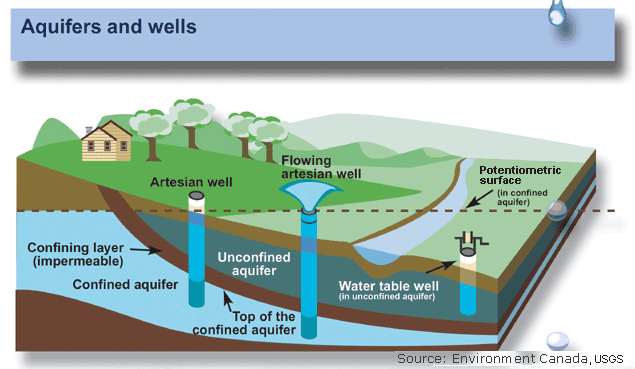
Figure 10. Aquifers and Wells
Groundwater Withdrawal
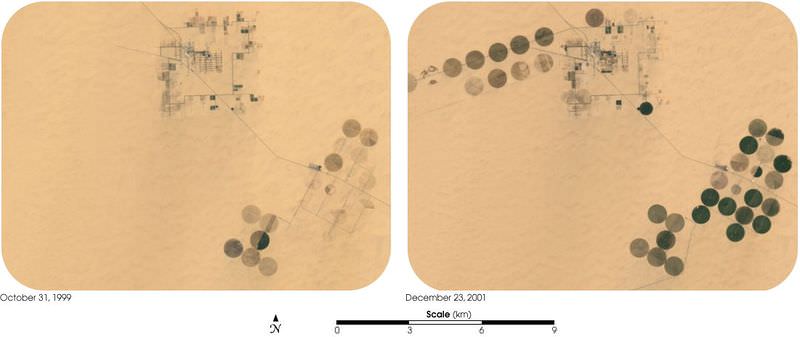
Figure 11
Is it practiced to make the desert blossom?
Many sunny, arid regions are skilful for growing crops as long every bit water can be added. Some of the increase in productivity is due to farming in regions that are technically too dry. Groundwater can be used to make the desert flower, only at what cost? And for how long? Eventually the wells will run dry out.
Groundwater Overuse
Some aquifers are overused; people pump out more h2o than is replaced. As the h2o is pumped out, the h2o table slowly falls, requiring wells to be dug deeper, which takes more money and free energy. Wells may get completely dry if they are not deep enough to achieve into the lowered water tabular array.
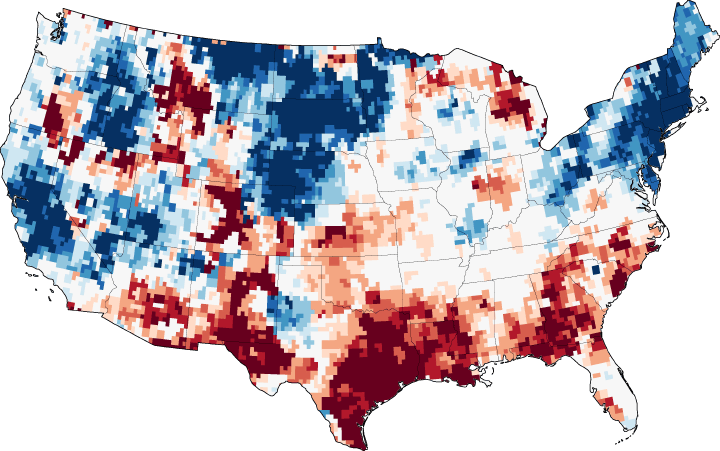
Figure 12. Intense drought has reduced groundwater levels in the southern U.S., peculiarly in Texas and New Mexico.
Other problems may stalk from groundwater overuse. Subsidence and saltwater intrusion are ii of them.
Ogallala Aquifer
The Ogallala Aquifer supplies almost one-third of the irrigation water in the United States. The Ogallala Aquifer is widely used past people for municipal and agricultural needs. (Figure 13). The aquifer is institute from xxx to 100 meters deep over an expanse of about 440,000 square kilometers!
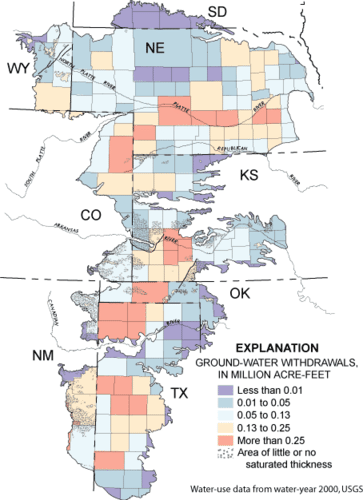
Figure 13. The Ogallala Aquifer is found beneath eight states and is heavily used.
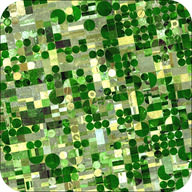
Figure fourteen. Farms in Kansas
The water in the aquifer is mostly from the last ice age. About 8 times more water is taken from the Ogallala Aquifer each year than is replenished. Much of the water is used for irrigation .Farms in Kansas apply central pivot irrigation (Figure 14), which is more efficient since water falls directly on the crops instead of being shot in the air. These fields are between 800 and 1600 meters (0.v and 1 mile) in diameter.
Subsidence
Lowering the water tabular array may cause the ground surface to sink. Subsidence may occur beneath houses and other structures. The San Joaquin Valley of California is 1 of the world'southward major agricultural areas. So much groundwater has been pumped that the land has subsided many tens of feet.
Salt Water Intrusion
When littoral aquifers are overused, salt water from the ocean may enter the aquifer, contaminating the aquifer and making information technology less useful for drinking and irrigation. Salt water incursion is a problem in developed coastal regions, such equally on Hawaii.
Summary
- When water is pumped from an aquifer, the water table declines and wells must be drilled deeper.
- The Ogallala Aquifer was filled in the ice historic period merely is being used to irrigate the farms of the Midwestern U.S. at a charge per unit far greater than it is being replenished.
- Basis subsidence and saltwater intrusion are two possible consequences of groundwater overuse.
Practice
Utilise this resource to answer the questions that follow.
- How has irrigation changed farming?
- What is leading to people's demands for boosted h2o?
- What practice scientists demand to run into to better plan for futurity h2o utilize?
- What is the GRACE satellite doing?
- How does GRACE notice groundwater aquifers?
- How people know the aquifers are existence depleted?
- What is happening in Republic of india? what will happen if the water continues to decline?
- What is the future of h2o?
Quality of Groundwater
As was noted at the very beginning of this affiliate, one of the skilful things about groundwater equally a source of water is that information technology is not equally easily contaminated as surface water is. Just there are two caveats to that: one is that groundwater can become naturally contaminated because of its very close connection to the materials of its aquifer, and the second is that once contaminated by homo activities, groundwater is very hard to clean up.
Natural Contamination of Groundwater
Groundwater moves slowly through an aquifer, and dissimilar the surface h2o of a stream, information technology has a lot of contact with the surrounding rock or sediment. In almost aquifers, the geological materials that make upwardly the aquifer are relatively inert, or are fabricated up of minerals that dissolve very slowly into the groundwater. Over time, however, all groundwater gradually has more and more than material dissolved within information technology equally it remains in contact with the aquifer. In some areas, that rock or sediment includes some minerals that could potentially contaminate the water with elements that might brand the water less than ideal for human consumption or agricultural apply. Examples include copper, arsenic, mercury, fluorine, sodium, and boron. In some cases, contamination may occur because the aquifer material has particularly loftier levels of the element in question. In other cases, the aquifer textile is but normal stone or sediment, but some particular feature of the water or the aquifer allows the contaminant to build up to significant levels.
An instance of natural contamination takes identify in the bedrock aquifers of the due east coast of Vancouver Island and the adjacent Gulf Islands. The aquifer is the Cretaceous (ninety Ma to 65 Ma) Nanaimo Grouping, which is made up of sandstone, mudstone, and conglomerate (Effigy 15).
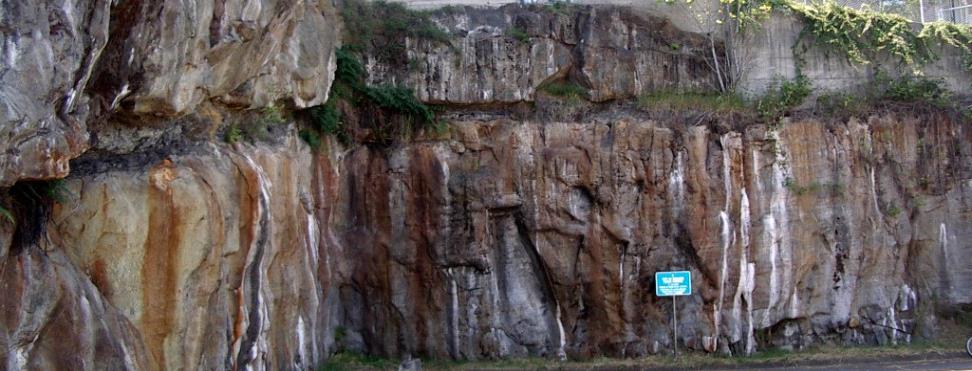
Figure 15. Cretaceous Nanaimo Group sandstone exposed in a Nanaimo parking lot [SE]
The rocks of the Nanaimo Grouping are not especially enriched in any trace elements, but the submarine-fan sandstone that makes upwardly much of the grouping is a lithic wacke, and therefore has relatively loftier levels of clay (for a sandstone). This clay is good at adsorbing[1] some elements from the water and desorbing others, and in the process, its pH goes upward (it becomes alkaline). At loftier pH levels (some as high as nine in the Nanaimo Group), the element fluorine that is nowadays naturally in the stone (as it is in almost whatsoever rock) has an increased tendency to dissolve in the water. In some areas, groundwater in the Nanaimo Group has fluorine levels that are well above recommended levels for drinking water. The World Health Organization (WHO) maximum acceptable concentration (MAC) for fluorine is 1.5 mg/L (milligrams per litre). Betwixt 5% and ten% of the domestic wells around Nanaimo and adjacent Gabriola Island have more than that, some every bit much as 10 mg/50. A small amount of fluorine in the human being nutrition is considered important for maintaining dental health, merely high levels tin can lead to malformation and discolouration of teeth, and long-term exposure can lead to other more than serious health effects such every bit skeletal problems.
Nanaimo Group groundwater can also have elevated levels of boron, again related to pH and adsorption from clay minerals. While boron at the levels found there is not toxic to humans, there is enough boron in some wells to exist toxic to plants, and the water cannot be used for irrigation.
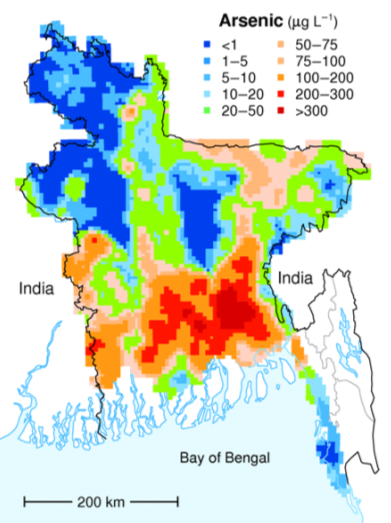
Figure sixteen. The distribution of arsenic in groundwater in Bangladesh. The WHO recommended safe level for arsenic is ten μg/L. All of the dark-green, orange, and red areas on the map exceed that limit. [From: BGS and DPHE. 2001. Arsenic contamination of groundwater in Bangladesh. Kinniburgh, D G and Smedley, P L, http://www.bgs.air-conditioning.uk/arsenic/bangladesh/.]
Rural residents in the densely populated land of Bangladesh (over ane,000 residents/km2, compared with 3.4/km2 in Canada) used to rely mostly on surface supplies for their drinking water, and many of these were field of study to bacterial contamination. Infant bloodshed rates were among the highest in the world and other illnesses such as diarrhea, dysentery, typhoid, cholera, and hepatitis were common. In the 1970s, international agencies, including UNICEF, started a programme of drilling wells to access abundant groundwater supplies at depths of twenty m to 100 m. Somewhen over 8 1000000 such wells were drilled. Infant bloodshed and disease rates dropped dramatically, but it was later discovered that the water from a high proportion of these wells has arsenic above safe levels (Figure 16).
Most of the wells in the affected areas are drilled into relatively recent sediments of the vast delta of the Ganges and Brahmaputra Rivers. While these sediments are not particularly enriched in arsenic, they take enough organic affair in them to utilize up any oxygen present. This leads to water with a naturally low oxidation potential (anoxic weather condition); arsenic is highly soluble under these weather condition, and so any arsenic present in the sediments easily gets dissolved into the groundwater. Arsenic poisoning leads to headaches, confusion, and diarrhea, and somewhen to vomiting, stomach hurting, and convulsions. If not treated, the final outcomes are centre illness, stroke, cancer, diabetes, coma, and expiry. There are means to treat arsenic-rich groundwater, merely information technology is a challenge in Bangladesh to implement the unproblematic and effective technology that is bachelor.
Anthropogenic Contamination of Groundwater
Groundwater tin become contaminated by pollution at the surface (or at depth), and there are many different anthropogenic (human being-caused) sources of contagion.
The vulnerability of aquifers to pollution depends on several factors, including the depth to the water table, the permeability of the cloth between the surface and the aquifer, the permeability of the aquifer, the slope of the surface, and the amount of precipitation. Bars aquifers tend to be much less vulnerable than unconfined ones, and deeper aquifers are less vulnerable than shallow ones. Steeper slopes mean that surface water tends to run off rather than infiltrate (and this can reduce the possibility of contamination). Contamination risk is also less in dry areas than in areas with heavy rainfall.
Studies of groundwater vulnerability have been completed for various regions of British Columbia. A groundwater vulnerability map for southern Vancouver Island is shown in Figure 17. The yellow to red areas are considered to accept high vulnerability to pollution from surface sources, and about of these are where the aquifers are unconfined in quite permeable unconsolidated sediments of either glacial or fluvial origin, where the water table is relatively shallow and the terrain is relatively flat.
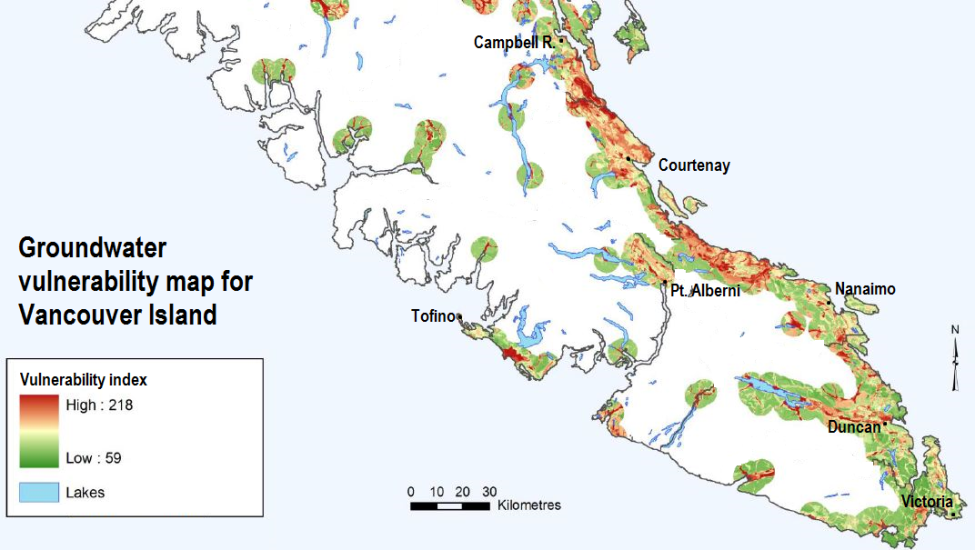
Effigy 17. The vulnerability to anthropogenic contamination of aquifers on southern Vancouver Island. Much of the isle is not mapped (shown as white) because of a lack of aquifer information in areas without wells. [From: Newton, P. and Gilchrist, A. 2022. Technical summary of intrinsic vulnerability mapping methods of Vancouver Island, Vancouver Island Water Resources Vulnerability Mapping Project, Vancouver Island University, 45pp. Used with permission. https://web.viu.ca/groundwater/PDF/VI_DRASTIC_Summary_Phase2_2010.pdf]
The important sources of anthropogenic groundwater contamination include the post-obit:
- Chemicals and beast waste related to agriculture, and chemicals applied to golf courses and domestic gardens
- Landfills
- Industrial operations
- Mines, quarries, and other rock excavations
- Leaking fuel storage tanks (especially those at gas stations)
- Septic systems
- Runoff from roads (e.g., winter salting) or chemical spills of materials being transported
Agriculture
Intensive agricultural operations and golf courses can have a significant impact on the environment, especially where chemicals and other materials are used to enhance growth or command pests. An example of agricultural contagion is in the Abbotsford area of the Fraser Valley, where nitrate levels above the 44 mg/L maximum acceptable level (expressed as nitrate) in the Abbotsford-Sumas aquifer have been observed since the 1950s; however, the trouble became much worse as agriculture intensity increased in the 1980s. By 2004, groundwater with nitrate levels in excess of 44 mg/L was reported over an expanse of near 75 km2 around Abbotsford, and the problem extended across the edge into the Sumas area of Washington State.
This region is intensively used for berry crops (especially raspberries and blueberries) and large poultry operations, likewise as lesser amounts of grazing and forage crops. Craven manure is typically stored in fields next to chicken barns, and may release nitrogen to the surroundings from runoff water, and from releases of ammonia gas. Over decades, both chemical fertilizers and chicken manure and other manures have been applied to the drupe crops to provide actress nitrogen to assist maximize drupe growth. If the fertilizer added is in excess of what the plants need, or is poorly timed compared to when it is needed, so the actress nitrogen may be leached into the groundwater below. Berry crops are irrigated over the summer to help the crops grow. Summer irrigation and winter rainfall may acquit excess nitrate from the near surface to the aquifer below.
Since the 1990s, agricultural practices have been tightened up to reduce the rate of groundwater contamination, but it volition have decades for nitrate levels to drop in the Abbotsford-Sumas aquifer. Agronomics and Agri-Food Canada and many others are conducting research on better irrigation and nitrate management techniques to reduce the amount of nitrogen that leaches to groundwater.
Landfills
In the past, domestic and commercial decline was unremarkably trucked to a "dump" (typically a hole in the ground), and when the pigsty was filled, it was covered with soil and forgotten. In situations like this, rain and melting snow can easily pass through the soil used to cover the refuse. This water passes into the waste product itself, and the resulting landfill leachate that flows from the lesser of the landfill can seriously contaminate the surrounding groundwater and surface water. In the by few decades, regulations effectually turn down disposal have been significantly strengthened, and of import steps have been taken to reduce the amount of landfill waste product by diverting recyclable and compostable materials to other locations.
A modern engineered landfill has an impermeable liner (typically heavy plastic, although engineered clay liners or natural clay may be acceptable in some cases), a plumbing arrangement for draining leachate (the rainwater that flows through the decline and becomes contaminated), and a network of monitoring wells both within and around the landfill (Figure 18). Once part or all of a landfill site is full, information technology is sealed over with a plastic embrace, and a organisation is put in identify to excerpt landfill gas (typically a mixture of carbon dioxide and methane). That gas can exist sent to a nearby location where it is burned to create oestrus or used to generate electricity. The leachate must be treated, and that can be done in a normal sewage treatment plant.
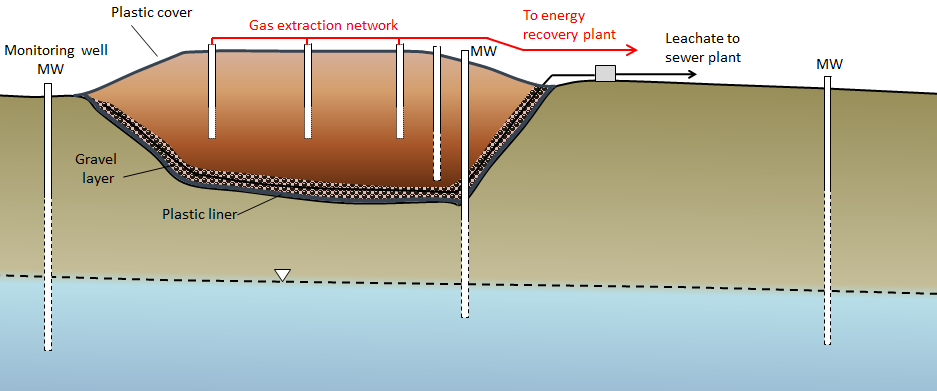
Figure xviii. A cross-department of a typical modern landfill [SE]
The monitoring wells are used to assess the level of the water table around the landfill and to collect groundwater samples so that any leakage can be detected. Because some leakage is almost inevitable, the platonic placement for landfills is in areas where the depth to the h2o table is significant (tens of metres if possible) and where the aquifer cloth is relatively impermeable. Landfills should also exist situated far from streams, lakes, or wetlands so that contamination of aquatic habitats can be avoided.
Today there are hundreds of abandoned dumps scattered across the country; most have been left to contaminate groundwater that we might wish to use sometime in the future. In many cases, it's unlikely that nosotros'll be able to exercise so.
Exercises: What Goes on at Your Landfill?
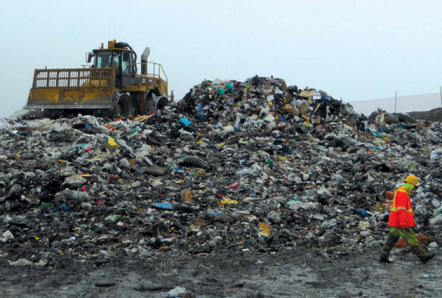
Figure 19. A landfill [SE photo]
Unless you lot live in a remote rural area, there's a good chance that the refuse you can't recycle is picked up at the curb and taken to a landfill. Most landfills are operated past cities or regional districts, and you should be able to detect information about yours on the appropriate local government website. Encounter if you tin can answer some the following questions:
- Which government body operates your landfill?
- Where is the landfill situated?
- Is your waste product all placed in a landfill, or are there other processes in use (e.g., incineration or composting)?
- Are landfill gases captured, and, if and so, what is done with them?
- What could be changed to amend the waste disposal state of affairs in your customs (e.g., more recycling, compost collection, waste material-to-energy technology)?
Industrial Operations
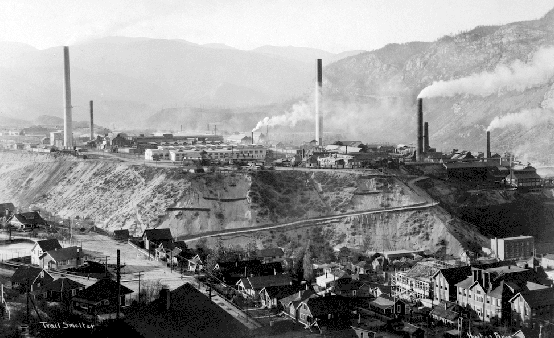
Figure 20. The Trail lead-zinc smelter in 1929
[http://upload.wikimedia.org /wikipedia/commons/2/20 /Trail_Smelter_in_Year_1929.png]
Although western Canada doesn't take the aforementioned extent of industrial pollution as other parts of the country, there are still seriously contaminated sites in the due west, nigh with the potential to contaminate groundwater. One example is the atomic number 82 and zinc smelter at Trail, B.C. The largest in the earth, information technology has been operating for over 100 years and has left a residue of metal contamination effectually the region (Effigy 20). In some parts of Trail, the contagion is serious enough that existing soil has been removed from residential properties and replaced with clean soil brought in from elsewhere. This contaminated soil has contributed to contamination of groundwater in the Trail area. Groundwater beneath the actual smelter site is contaminated, and the operator (Teck Resource) is currently working on plans to preclude that h2o from reaching the nearby Columbia River.
Mines, Quarries, and Rock Excavations
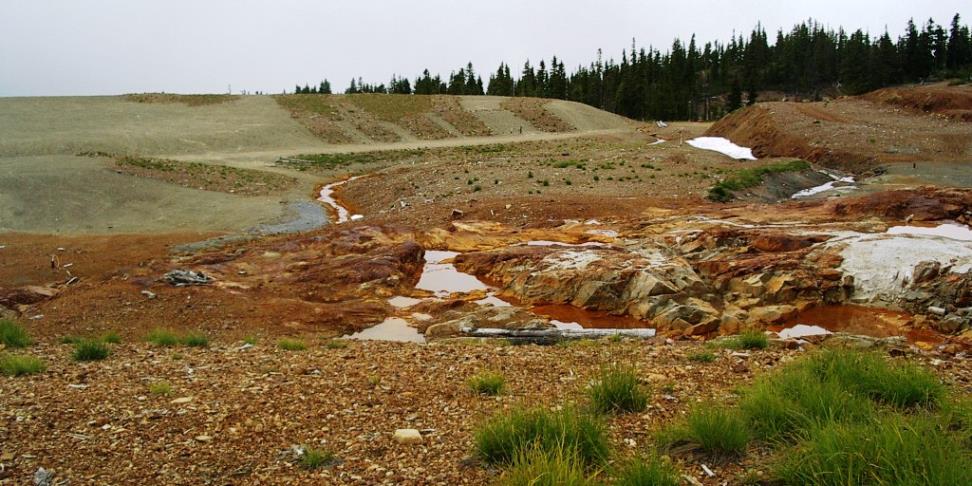
Effigy 21. Acidic runoff at the abased Mt. Washington Mine near Courtenay, B.C. [SE]
Mines and other operations that involve the excavation of large amounts of rock (e.g., highway construction) have the potential to create serious environmental damage. The exposure of rock that has previously not been exposed to air and water can lead to the oxidation of sulphide-begetting minerals, such a pyrite (FeStwo), within the rock. The combination of pyrite, h2o, oxygen, and a special blazon of bacteria (Acidithiobacillus ferrooxidans) that thrives in acidic conditions leads to the generation of acidity, in some cases to pH less than ii. Water that acidic is hazardous by itself, but the low pH also has the holding of increasing the solubility of sure heavy metals. The h2o that is generated by this process is known as acid rock drainage (ARD). ARD tin occur naturally where sulphide-bearing rocks are almost the surface. The issue of ARD is a major ecology business concern at both operating mines and abandoned mines. In streams around the Mt. Washington Mine on Vancouver Island (Figure 21), copper levels are high plenty to exist toxic to fish. Groundwater adjacent to the contaminated streams in the area is very likely contaminated as well.
Leaking Fuel Tanks
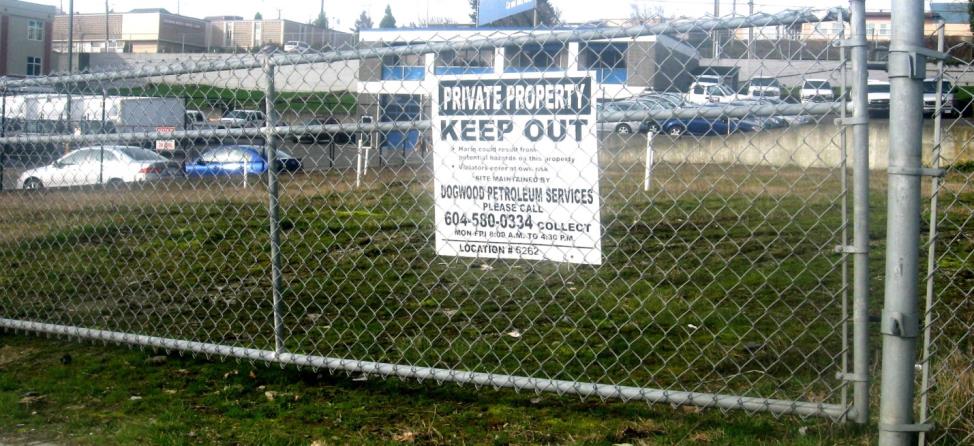
Figure 22. A closed and fenced gas station site in Nanaimo, B.C. The white pipes in the background are wells for monitoring groundwater contamination on the site. [SE]
Underground storage tanks (USTs) are used to shop fuel at gas stations, industrial sites, airports, and anywhere that large volumes of fuel are used. They do not last forever, and eventually they beginning to leak their contents into the ground. This is a particular problem at older gas stations — although it may besides become a future problem at newer gas stations. You lot may accept noticed gas stations that have been closed and so surrounded by concatenation-link fence (Figure 22). In virtually all such cases the closure has been triggered by the discovery of leaking USTs and the requirement to finish operations and remediate the site.Petroleum fuels are complex mixtures of hydrocarbon compounds and the backdrop of their components—such every bit density, viscosity, solubility in h2o, and volatility — tend to vary widely. Equally a effect, a petroleum spill is like several spills for the price of one. The petroleum liquid slowly settles through the unsaturated zone and then tends to float on the surface of the groundwater (Effigy 23). The more readily soluble components of the spill deliquesce in the groundwater and are dispersed forth with the normal groundwater menstruum, and the more volatile components of the spill rise toward the surface, potentially contaminating buildings.
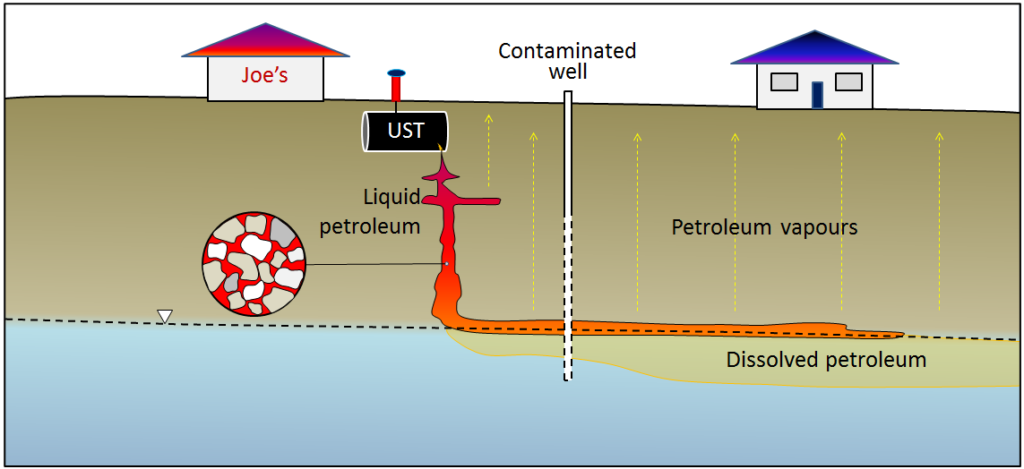
Figure 23. A depiction of the fate of different components of a petroleum spill from an hole-and-corner storage tank. [SE]
Exercises: Find a Leaking UST in Your Community
There is almost certainly a leaking UST at a former gas station near yous. Look for an empty property that is surrounded by a chain-link fence with "No Trespassing" signs. Yous might come across bear witness of monitoring wells (like those shown in Effigy 23), and at that place could be some petroleum barrels around that are being used to shop contaminated water. One time y'all've identified i of these, y'all'll probably start seeing them everywhere!
Septic Systems
In areas that are not served by sewage networks leading to a central sewage treatment establish, most homeowners rely on septic systems for disposal of sewage. In that location are two principal components to a unproblematic septic organization, the septic tank and the drainage field (Figure 24). A typical septic tank is constructed of either physical or plastic and has a volume of five,000 50 to 10,000 L (5 m3 to ten m3). This forms the beginning treatment and is designed to beanaerobic (without oxygen). That promotes the activeness of certain bacteria that help pause downward the waste. As the waste product is degraded, some portions tend to sink to form sludge at the base of the tank, and others float to the surface, forming a scum layer. A septic tank may be divided into two parts to keep the sludge at the bottom and the scum on the elevation from draining out. The water then moves to the drainage field, which provides the right conditions for a unlike gear up of bacteria that operate in aerobic atmospheric condition. The drainage field includes an assortment of plastic pipes that are perforated to allow the effluent to bleed out over a large surface area and seep slowly into the ground. In order to install a drainage field, it is first necessary to test the soil below, as it must exist sufficiently permeable to allow the effluent to percolate away, but not then permeable that it flows too quickly and the soil is not able to filter out the pathogenic bacteria.
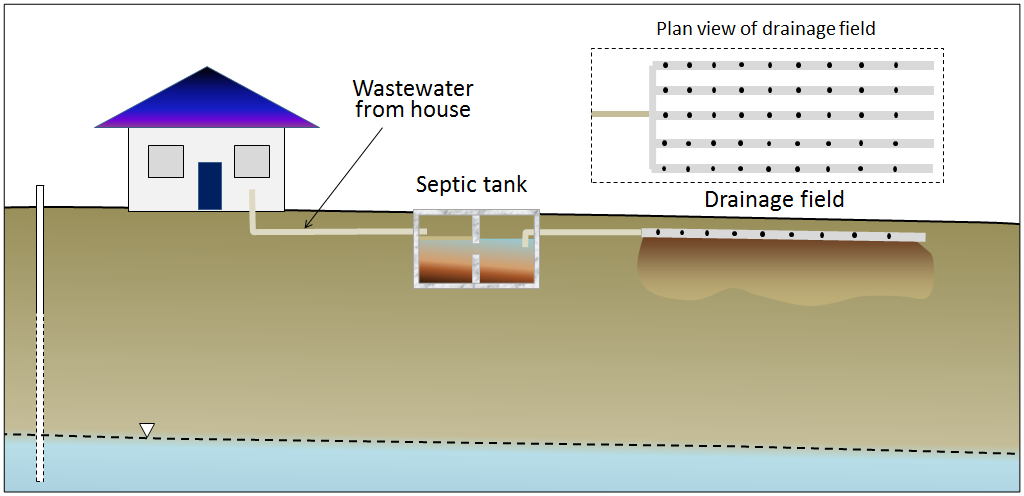
Figure 24. A typical septic system. [SE]
If they are properly installed and used, and if the sludge is periodically removed from the tank, a septic organisation should exist effective in treating the sewage for decades. The anaerobic and aerobic bacteria should exist able to break down the incoming waste and in that location should exist little risk to the surface environment or groundwater. But many things tin go wrong with a septic system, including the post-obit:
- If inappropriate chemicals are added to the waste stream, they may interfere with the natural breakdown of the sewage.
- If the tank is non periodically pumped out, solids can get into the drainage field and compromise the drainage, resulting in the period of effluent toward the surface.
- If the soil is either non sufficiently permeable or too permeable, the effluent will non drain abroad (and will start to pool at the surface) or it will bleed as well quickly.
- If the drainage field is constructed in an surface area where the water table is close to surface, some of the effluent is probable to flow into the groundwater without being treated.
Prevention and Mitigation of Groundwater Contamination
As illustrated in the landfill case above, there are two fairly simple ways to significantly reduce the run a risk and degree of groundwater contamination from surface sources. One is to prevent rainwater from infiltrating downwards to the h2o table and picking upward contaminants; this can be achieved by simply capping or roofing over the landfill, mine tailings, or spill site. The second is to provide an impermeable barrier beneath the contaminant. Modernistic landfills and mine tailings impoundments are all built using some combination of clay and engineered plastic barriers. Both of these solutions — caps and liners — are field of study to failure due to leaks.
Once contaminants are in the groundwater, the main course of remediation is to pump out the contaminated water and care for it at the surface. This tin can be a slow process, and preventing the contaminant from travelling significantly during this process can be accomplished by manipulating local groundwater flow through the extraction or injection of h2o at certain locations. Consider this in the exercise below.
Exercises:Manipulating a Contaminant Plume
This diagram shows a groundwater contaminant plume in ruby-red. The source of the contamination has been removed but if the plume is not dealt with, information technology will eventually enter the stream and threaten the health of wildlife. Pumping the contaminant from well B for treatment volition not be sufficient to prevent some of the contamination from making it to the stream.
What could y'all practice at wells A and C to preclude this? Explain and use the diagram beneath to illustrate the expected changes to the water table and the movement of the plume.
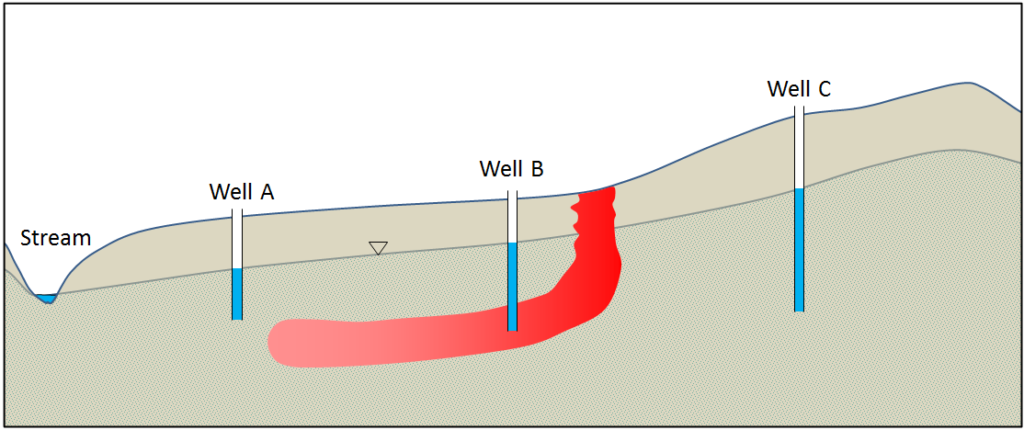
Figure 25. Contaminant Plume
Check Your Agreement
Answer the question(s) below to see how well you understand the topics covered in the previous section. This short quiz doesnon count toward your course in the grade, and yous can retake information technology an unlimited number of times.
Use this quiz to check your understanding and decide whether to (1) study the previous section farther or (2) move on to the adjacent section.

Source: https://courses.lumenlearning.com/wmopen-geology/chapter/outcome-components-of-groundwater/
Posted by: bowershavocapiente.blogspot.com
0 Response to "How Do Rocks And Soil Clean Water"
Post a Comment